D3 design story: from two unreleased prototypes to a belt-driven chassis
Why the MMC D3 is called D3, why it is so adjustable, and the belt drive that became the base of every MMC chassis since.
Published 23 October 2026
Why “D3”? Before the D3 went on sale, there were a D1 and a D2. Neither was ever released. The design that came after them was the D3, and the name stuck.
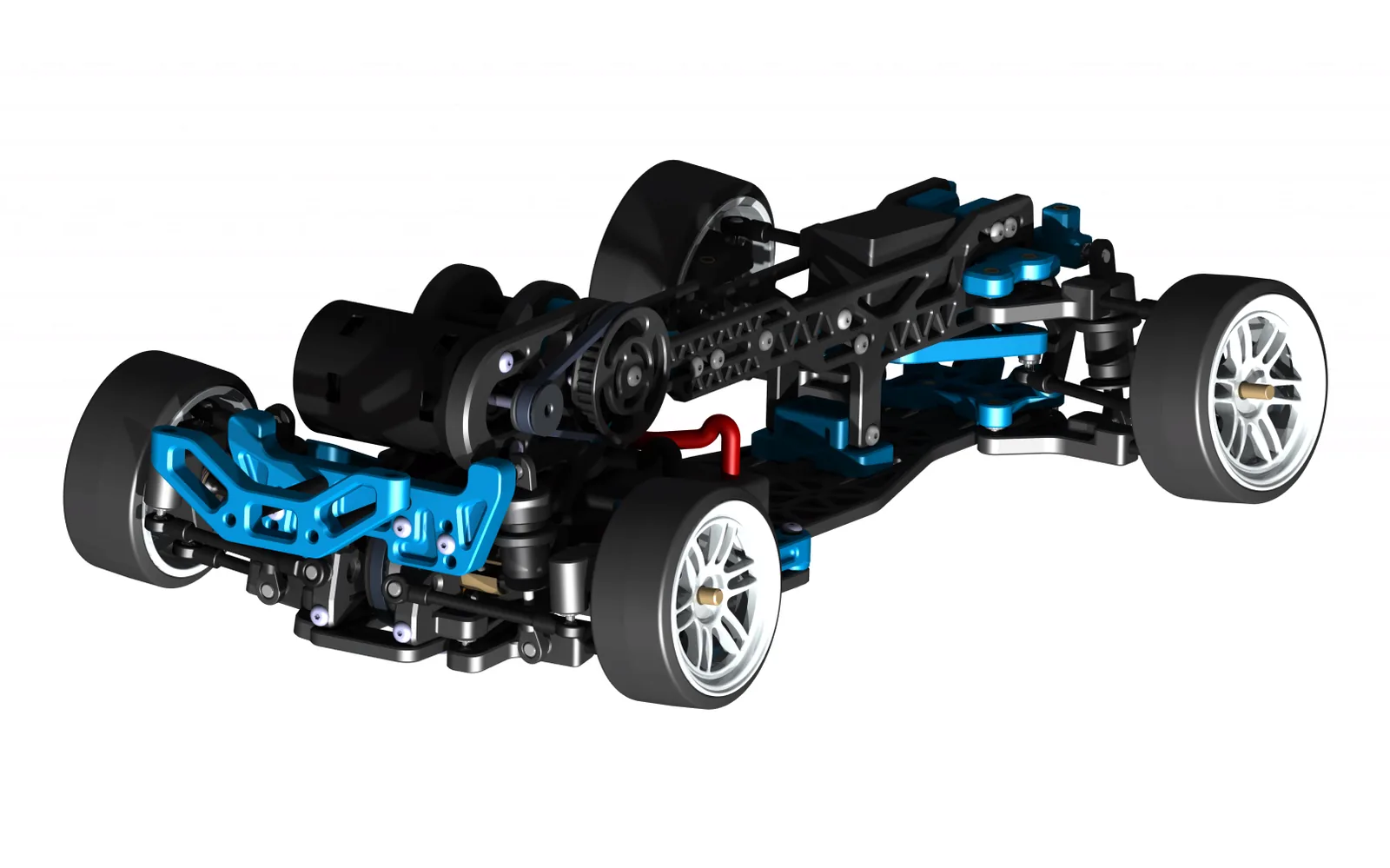
Built to be adjusted
The D3 is the most adjustable MMC chassis: the wheelbase goes from 240 to 273 mm, the motor position moves the centre of gravity, and the front and rear suspensions adjust track width, camber, caster and toe, with Ackerman at the front and several arm mounting positions at the rear.
The reason is simple: that adjustability was missing from the cars on the market.
The belt drive
This is the key design decision of the D3. The D1 and D2 had no belts, and they never quite worked. The D3 introduced a fully belt-driven transmission, and it was kept for the XP1 and XP2 afterwards, with a slightly different layout but very similar.
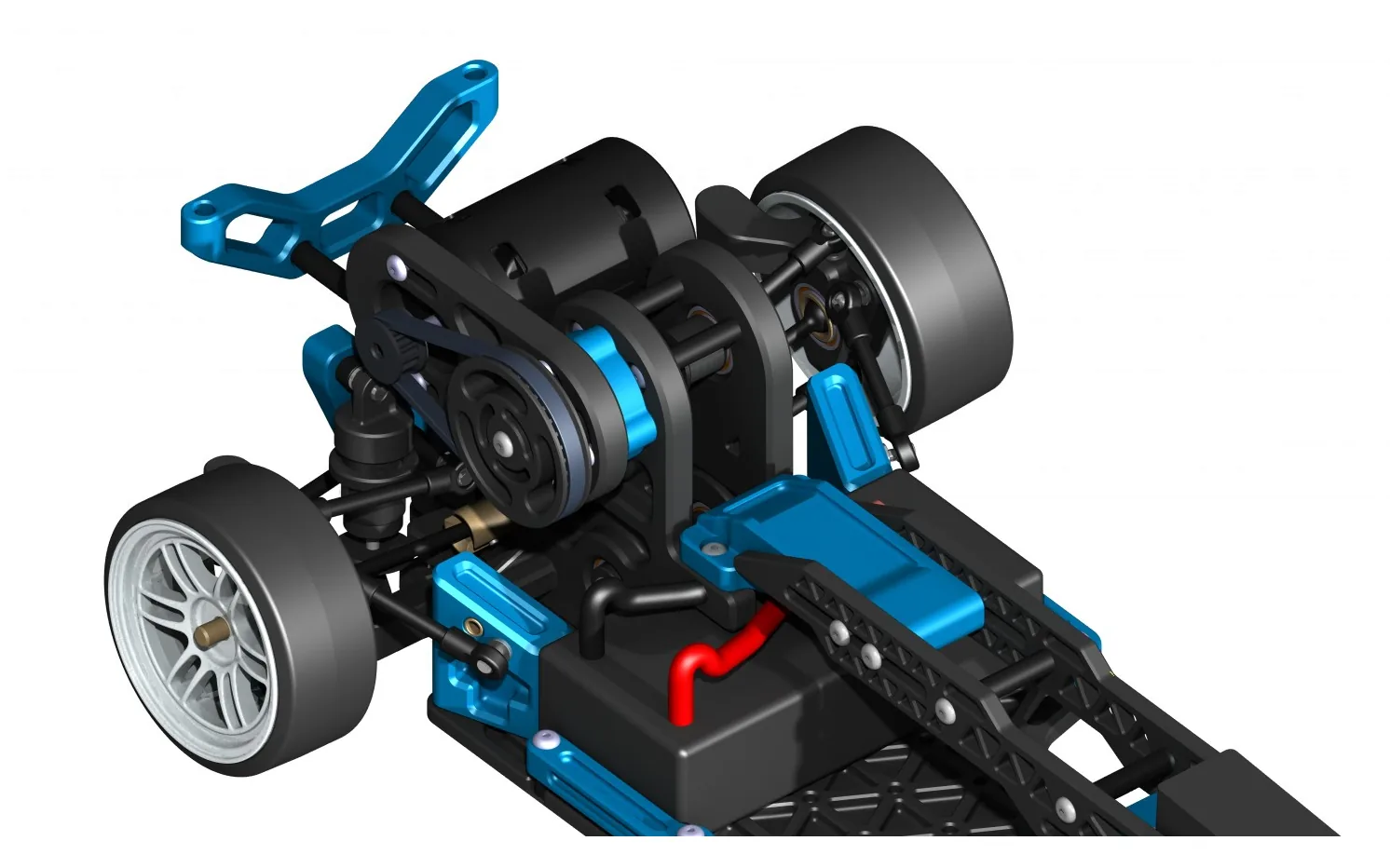
Belts suit 3D-printed cars particularly well, because HTD3M pulleys can be printed with a completely free design. The D3’s pulleys were reworked from a public-domain design by Katharsis on Printables.
Prototypes and fixes
The prototype worked well from the start. The only problems were belt tension and slight changes to the front suspension and the rear suspension geometry.
First time on track
Once the belt tension was sorted, it felt very good. That is why the D3 has never needed a revision: it is still on V1.
Since then, the D3 files gained a deck that fits a 220 mm print bed, an HCG conversion and a body magnet support. The D3 build guide has the parts lists, print settings and setup notes.
Keep reading
- How-to and buying guides
XP1 vs XP2 vs D3: which MMC drift chassis should you build?
Suspension, drivetrain, adjustability and shopping list of the three printable MMC RC drift chassis, side by side, to help you pick the right one.
- How-to and buying guides
How to install heat-set threaded inserts in 3D-printed RC parts
The tool you need, the trick to get M3 brass inserts perfectly square, and how to fix one that went in crooked.
- How-to and buying guides
RDX spool or differential? Choosing the rear end for an MMC drift chassis
Why MMC chassis were designed around the Rhino C-LSD, when an RDX spool makes more sense, and how each one fits the XP1, XP2 and D3.